
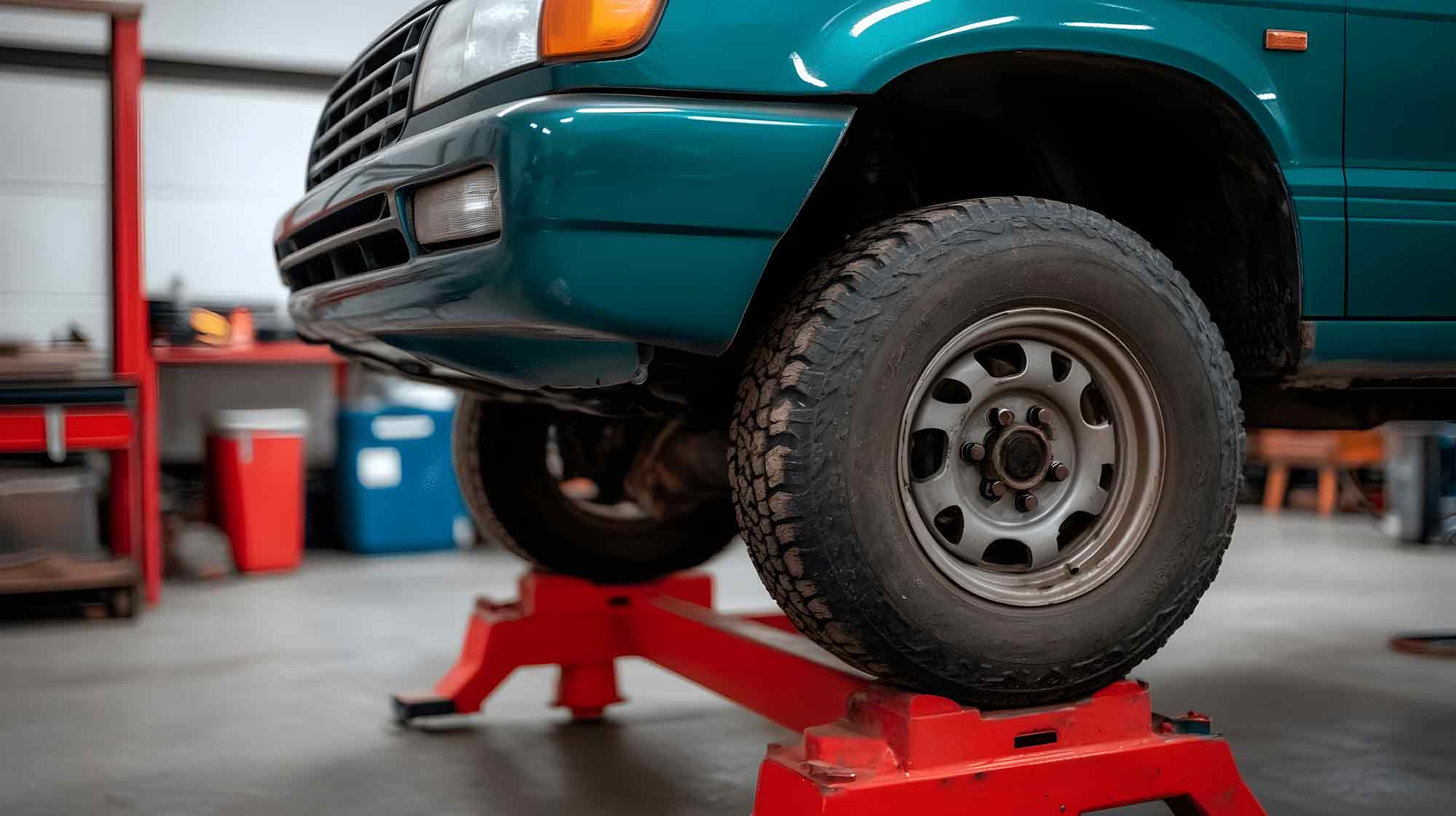
Torn between booking a mobile mechanic or taking your car to a garage? Here's the honest comparison – what each option actually offers, what they cost, and when you should choose one over the other.
Your car needs work. Maybe it's the annual service that's due, or that warning light that's been glowing ominously on your dashboard for a week, or the brakes that are starting to squeal every time you stop. You know you need to sort it, but here's the dilemma: do you book a mobile mechanic to come to your driveway, or do you bite the bullet and take it to a garage?
Ten years ago, this wasn't even a question. Garages were pretty much your only option unless you had a mate who was handy with cars. But the mobile mechanic industry has absolutely exploded in the past decade, and now you've got a genuine choice to make.
The thing is, everyone seems to have an opinion. Your colleague swears by their mobile mechanic and thinks garages are a rip-off. Your brother-in-law reckons mobile mechanics are cowboys who can't get proper garage jobs. Your neighbour uses both depending on the work needed. Who's right?
The annoying answer is: they all are, depending on circumstances. Mobile mechanics and garages each have distinct advantages and limitations, and understanding these will help you make the right choice for your specific situation.
Let's dig into the real differences, the actual costs, and the honest truth about when each option makes sense.
The Fundamental Difference
Before we compare pricing, quality, or convenience, let's understand the core difference between mobile mechanics and garages.
Mobile Mechanics: Your Driveway Becomes the Workshop
What they are: Self-employed (usually) mechanics who work from fully-equipped vans, travelling to customers' homes or workplaces to carry out repairs and servicing on-site.
The setup: Everything they need lives in their van – tools, diagnostic equipment, commonly-needed parts, consumables. Your driveway, car park, or roadside becomes their temporary workshop.
The business model: Lower overheads (no garage rent, no receptionists, no waiting rooms), which theoretically means lower prices. Direct relationship with customers – no middleman.
The limitations: Can't do work requiring vehicle hoists, specialist workshop equipment, or extensive facilities. Weather-dependent (working on your drive in January rain isn't fun). Limited parts inventory (though most can source parts quickly).
Garages: Traditional Workshop Setup
What they are: Fixed premises with workshop facilities, vehicle lifts, comprehensive equipment, and usually multiple mechanics working simultaneously.
The setup: Permanent building with inspection pits or hydraulic lifts, extensive tool collections, parts storage, specialist equipment (wheel alignment rigs, AC machines, welding facilities), and often MOT testing facilities.
The business model: Higher overheads (rent, business rates, multiple staff wages, extensive insurance) reflected in pricing. Can handle any job thrown at them. Scale allows specialisation.
The limitations: You lose access to your vehicle during work. Requires you to travel there and back (or arrange collection/delivery). Appointment lead times can be weeks. Often less personal relationship with actual mechanic doing the work.
The Overlap
Here's where it gets interesting: there's significant overlap in what both can do. Basic servicing, brake work, battery replacement, diagnostics, suspension repairs – both mobile mechanics and garages handle these routinely. The question isn't always "which one CAN do this?" but rather "which one makes more sense for my situation?"
Cost Comparison: The Real Numbers
Right, let's talk money. This is often the deciding factor, so let's be specific about what you'll actually pay in 2025.
Labour Rates
Garages:
- Independent garages: £45-£65/hour (regional), £60-£90/hour (London)
- Main dealers: £80-£150/hour (yes, really)
- Fast-fit chains: £40-£70/hour
- Specialist workshops: £70-£120/hour
Mobile mechanics:
- Regional: £30-£55/hour
- Major cities: £40-£65/hour
- London: £50-£80/hour
- Specialists (EV, classic cars): £60-£90/hour
- Plus call-out fee: £45-£85
First observation: Mobile mechanic hourly rates are often similar to or slightly lower than independent garages. The call-out fee changes the equation, though.
Real-World Job Comparisons
Let's compare actual jobs to see where the money difference really lies:
Full Service (annual, 12k miles)
Independent Garage:
- Labour: 1.5 hours @ £55/hour = £82.50
- Parts and fluids: £45-£60
- Total: £127.50-£142.50
- Your time: 2-3 hours (drop-off, collection, waiting or arranging transport)
Mobile Mechanic:
- Labour: 1.5 hours @ £45/hour = £67.50
- Call-out: £55
- Parts and fluids: £40-£55
- Total: £162.50-£177.50
- Your time: 15 minutes (showing them the car, signing off)
Winner: Garage by £20-£35... but only if you value your 2-3 hours at nothing. If your time is worth £15/hour (minimum wage territory), the mobile mechanic actually works out cheaper when you factor in convenience.
Battery Replacement
Independent Garage:
- Labour: 30 mins @ £55/hour = £27.50
- Battery: £90 (typical mark-up)
- Total: £117.50
- Your time: 1-2 hours minimum
Mobile Mechanic:
- Labour: 30 mins @ £45/hour = £22.50
- Call-out: £55
- Battery: £75 (lower mark-up, direct sourcing)
- Total: £152.50
- Your time: 15-20 minutes
Winner: Garage by £35, but with the major inconvenience of getting there with a dead battery. Most people call mobile mechanics for batteries specifically because their car won't start – making the garage option impractical anyway.
Brake Pads (Front Axle)
Independent Garage:
- Labour: 1.5 hours @ £55/hour = £82.50
- Parts: £90-£120
- Total: £172.50-£202.50
Mobile Mechanic:
- Labour: 1.5 hours @ £45/hour = £67.50
- Call-out: £50
- Parts: £70-£95
- Total: £187.50-£212.50
Winner: Pretty much a draw. Mobile mechanic is £15-£25 more expensive but saves you hours of hassle.
Oil Change
Fast-Fit Chain (Halfords, Kwik-Fit):
- Labour: Included in service price
- Oil and filter: £40-£70 all-in
- Total: £40-£70
- Your time: 45-90 minutes (with appointment)
Mobile Mechanic:
- Labour: 30 mins @ £45/hour = £22.50
- Call-out: Often waived for oil changes (or £30-£40)
- Oil and filter: £30-£45
- Total: £52.50-£87.50
Winner: Fast-fit chains on price, but they'll absolutely try to upsell you on air filters, brake fluid, and other services you probably don't need right now. Mobile mechanic is more expensive but you avoid the hard-sell nonsense.
Diagnostic and Fault Finding
Independent Garage:
- Diagnostic charge: £50-£90 (often deducted from repair cost)
- Hourly rate for investigation: £55-£70/hour
- Total: Variable depending on complexity
Mobile Mechanic:
- Call-out: £50-£70
- Diagnostic time: Charged at hourly rate
- Total: Very similar to garage
Winner: Draw on cost. Mobile mechanic has slight edge because they come to you, but garages might have more comprehensive diagnostic equipment for tricky electrical faults.
The Hidden Costs
Garages:
- ✗ Your time travelling there and back (1-2 hours minimum)
- ✗ Possible courtesy car hire if you need mobility
- ✗ Public transport or lifts from friends/family
- ✗ Taking time off work if garage hours don't suit
- ✗ Potential for upselling ("While we've got it in, we noticed...")
Mobile Mechanics:
- ✗ Call-out fees (£45-£85)
- ✗ Weather delays (occasionally they can't work in terrible conditions)
- ✗ Limited parts availability (might need second visit if specialist part required)
- ✗ Parking/space constraints if your driveway is inaccessible
The Bottom Line on Cost
For small, quick jobs (oil change, battery, bulb replacement): Garages and fast-fit chains are cheaper, but the convenience of mobile mechanics often justifies the £20-£40 premium.
For medium jobs (servicing, brakes, suspension): Costs are remarkably similar once you factor in call-out fees. Mobile mechanics edge ahead when you value your time.
For major jobs (clutch, gearbox, head gasket): Garages are often significantly cheaper because mobile mechanics either won't do these or will charge premium rates due to difficulty working on driveways.
For diagnostics: Very similar pricing, choose based on convenience and the specific mechanic's/garage's reputation for diagnostics.
Convenience: The Real Game-Changer
Let's be honest – for many people, cost isn't actually the deciding factor. Convenience is.
Mobile Mechanic Convenience Factors
You don't leave home: This is massive if you work from home, have young children, are elderly or have mobility issues, or just value your time. The mechanic comes to you, works whilst you carry on with your day, and leaves. You've lost maybe 20 minutes total (greeting them, approving work, paying).
Flexible timing: Many mobile mechanics work evenings and weekends. Need your car serviced on Saturday morning whilst you sort the house out? No problem. Want them to come Tuesday afternoon whilst you're on a Teams call? Often doable.
Your driveway is safer than a garage forecourt: Some people (particularly women, elderly, or those who've had bad garage experiences) feel more comfortable with the mechanic working at their home where they can watch and ask questions.
No arranging alternative transport: When your car's at the garage, you need to either: walk/bus/train home, get a lift, arrange a courtesy car, or wait around. All of these are fainter.
You can watch the work: Fancy seeing exactly what they're doing? Stand there with a cuppa and watch. Most mobile mechanics are happy to explain what they're finding and why certain work is needed. Transparency is easier when it's on your driveway.
Immediate availability: Many mobile mechanics can attend same-day or within 24-48 hours. Garages often book out 1-2 weeks ahead for anything non-urgent.
Garage Convenience Factors
Drop and go: Hand over your keys, walk away, pick up later. You don't need to be present. For people with rigid work schedules, this can actually be more convenient than coordinating with a mobile mechanic.
Courtesy cars: Many garages provide courtesy cars, especially for major work taking multiple days. Mobile mechanics obviously can't offer this.
One-stop shop: MOT, service, repairs, tyres, diagnostics – all in one place. You don't need to coordinate multiple different service providers.
Weather-proof: Garages work in any weather. Your service won't be delayed because it's chucking it down.
No space requirements: Don't have a driveway or safe place to work on your car? Garage is your only option.
Established premises: Some people just feel more comfortable with a physical business location rather than someone turning up in a van. There's psychological security in knowing where they are.
The Verdict on Convenience
Mobile mechanics win for: Work-from-home people, parents with young kids, elderly/mobility-impaired, anyone valuing their time highly, and people wanting transparency.
Garages win for: People needing courtesy cars, those with rigid 9-5 schedules, anyone without suitable space for on-site work, and people preferring established premises.
Quality of Work: Separating Myth from Reality
There's a persistent myth that mobile mechanics are somehow inferior to garage mechanics. Let's address this head-on.
The "Mobile Mechanics Are Cowboys" Myth
Where this comes from: Like any unregulated industry, mobile mechanics include both excellent professionals and absolute chancers. Because they're more visible (working on your driveway rather than hidden in a garage workshop), bad mobile mechanics get noticed more.
The reality: Many mobile mechanics are ex-garage mechanics who went self-employed because:
- They were tired of giving the garage owner 60% of what customers paid
- They wanted flexibility and control over their work
- They could earn more working for themselves
- They preferred direct customer relationships
Mobile mechanics need the same qualifications (City & Guilds, IMI) as garage mechanics. There's nothing inherently inferior about working from a van instead of a fixed workshop.
The "Garages Are More Reliable" Myth
Where this comes from: Established business premises feel more trustworthy than a bloke in a van. If something goes wrong, you know where the garage is.
The reality: Garage quality varies wildly. Main dealers charge premium prices and usually deliver quality work (though they'll almost certainly recommend only genuine parts at massive mark-ups). Independent garages range from brilliant to absolutely shocking. Fast-fit chains are hit-and-miss – often staffed by inexperienced mechanics working under pressure to hit targets.
Being a garage doesn't automatically mean better work. Some of the worst mechanical work we've seen has come from "established" garages cutting corners to maintain profit margins.
What Actually Determines Quality
Whether you're using a garage or mobile mechanic, work quality depends on:
1. Qualifications and experience
- City & Guilds Level 3 or IMI certification
- Years working on vehicles
- Manufacturer-specific training
- Continuous professional development
2. Equipment quality
- Professional-grade diagnostic tools (not cheap eBay scanners)
- Proper tool sets (Snap-on, Mac Tools, not bargain basement stuff)
- Well-maintained, calibrated equipment
3. Work ethic and integrity
- Honest about what actually needs doing
- Doesn't invent problems to boost bills
- Takes pride in their work
- Stands behind their work with warranties
4. Customer reviews and reputation
- What do previous customers say?
- Are reviews specific and detailed?
- How does the mechanic/garage respond to complaints?
- Word-of-mouth recommendations
These factors matter far more than whether someone works from a van or a building.
Work Quality Comparison: Where Each Excels
Mobile mechanics often excel at:
- Personal attention (it's just you and them, not one of 20 cars in the garage)
- Communication (direct relationship, no receptionist intermediary)
- Honesty (lower overheads mean less pressure to upsell)
- Efficiency (they're incentivised to work quickly and well to get to next job)
Garages often excel at:
- Complex diagnostics requiring extensive equipment
- Work quality consistency (established processes and quality control)
- Specialist work (gearbox rebuilds, engine work, bodywork)
- Documentation and warranty structures
The Actual Quality Verdict
Stop thinking "garage vs. mobile mechanic" and start thinking "qualified, reputable professional vs. cowboy." You can find excellent work and terrible work in both categories.
Choose based on:
- ✅ Qualifications displayed
- ✅ Reviews from real customers
- ✅ Professional presentation and equipment
- ✅ Clear communication and transparency
- ✅ Appropriate insurance
- ✅ Written quotes and warranties
The working location is irrelevant if these fundamentals are in place.
What Mobile Mechanics Can and Can't Do
This is crucial for making the right choice. Understanding the practical limitations of mobile mechanics will save you time and frustration.
Jobs Mobile Mechanics Handle Brilliantly
Routine servicing – Full and interim services are perfect mobile mechanic territory. They bring all necessary parts and fluids, complete the work efficiently on your driveway, stamp your service book, and you're done.
Battery replacement – Probably the most common mobile mechanic job. Dead battery, they come with replacement, fit it, register it (if required for your vehicle), job done. Can't get much simpler.
Brake pads and discs – Standard brake work is absolutely fine for mobile mechanics. They bring the necessary tools, replace worn pads/discs, and properly bed in new parts. One of their bread-and-butter services.
Diagnostic scanning – Modern mobile mechanics carry professional diagnostic equipment. They can read fault codes, identify sensor issues, and pinpoint problems just as well as garages in most cases.
Alternator and starter motor replacement – Common failures, especially in older vehicles. Mobile mechanics handle these regularly. Most vehicles allow reasonably accessible access to these components.
Suspension work – Shock absorbers, springs, drop links, bushes – most suspension components are mobile mechanic-friendly. Some vehicles with complex suspension systems might challenge them, but standard setups are fine.
Minor electrical work – Light bulbs, fuses, simple wiring repairs, sensor replacements – all manageable on driveways.
Pre-MOT inspections – Mobile mechanics excel at these. They check your vehicle for likely MOT failures, advise on necessary work, and help you avoid surprises at the test centre.
Fluid changes – Coolant, brake fluid, power steering fluid – straightforward jobs that don't require specialist facilities.
Jobs Mobile Mechanics Struggle With (Or Can't Do At All)
MOT testing – Legally impossible. MOTs must be conducted at approved test centres by certified testers using calibrated equipment. End of discussion. Mobile mechanics can do everything around MOTs (pre-checks, collection/return service, post-MOT repairs) but cannot conduct the actual test.
Major engine work – Head gasket replacement, timing chain work, engine removal – these need vehicle hoists, engine stands, clean workshop conditions, and often multiple days. Some highly experienced mobile mechanics tackle these, but most sensibly decline.
Gearbox and clutch work – Whilst some mobile mechanics do clutch replacements (it's physically possible on driveways), many won't. Removing gearboxes on your driveway is challenging, needs proper vehicle support, and requires significant space. Automatic gearbox work is almost always garage territory.
Welding and fabrication – Welding underneath vehicles parked on driveways is generally inadvisable (safety, fire risk, lack of proper ventilation). Exhaust patches might be possible; structural welding isn't.
Wheel alignment – Proper four-wheel alignment requires laser or computer-aided alignment equipment that simply can't be transported to your driveway. Some mobile mechanics can do basic rough alignment, but for proper geometry correction, you need an alignment specialist.
Air conditioning work – AC servicing requires specialist equipment to safely evacuate old refrigerant (it's illegal to just vent it), check for leaks under pressure, and recharge with precise amounts of new refrigerant. Some mobile mechanics have portable AC machines; most don't. Often garage territory.
Bodywork and paint – Dent repair, paint correction, rust treatment requiring spray booths and curing facilities – obviously garage-only.
Extensive diagnostics on complex electrical faults – Whilst mobile mechanics handle most diagnostics fine, really tricky intermittent electrical gremlins sometimes need garage-level test equipment, manufacturer-specific diagnostic platforms, and extensive testing time that's difficult to achieve on driveways.
Work requiring vehicle off the ground for extended periods – Anything needing the vehicle on jacks for hours (rather than minutes) is risky on driveways. Professional garage hoists are safer for lengthy jobs.
The Grey Area Jobs
Some jobs fall into a grey area where capable mobile mechanics can do them, but it might not be ideal:
Timing belt replacement – Possible on driveways, requires correct tools and knowledge, takes several hours. Many mobile mechanics offer this; many prefer garage environments for the space and time.
Fuel pump replacement – Often requires dropping the fuel tank, which is doable but messy and awkward on driveways. Depends on vehicle design.
Subframe removal work – Some suspension repairs require subframe removal. Theoretically possible on driveways with right equipment but pushing the boundaries of safe driveway working.
Complicated diagnostic work – If fault-finding is going to take 3-4 hours of testing, a garage environment is usually more practical.
How to Know Which Option for Your Job
Simple rule: If you're not sure whether a mobile mechanic can handle your job, ask them. Good mobile mechanics will honestly tell you if something's beyond driveway capabilities. They'd rather decline work than bodge it or do a half-job.
Red flags: Mobile mechanic who claims they can do absolutely anything. They can't. Nobody can. Garages with vehicle lifts, comprehensive facilities, and multiple specialists can't do some jobs (exotic cars, complex electrical faults, specialist performance work). A bloke with a van definitely has limitations.
Warranty and Comeback: What Happens When Things Go Wrong?
This is a major concern when choosing between garages and mobile mechanics. If work fails or goes wrong, what's your recourse?
Garage Warranties
What you typically get:
- Parts warranty: Usually manufacturer's warranty (6-12 months typical)
- Labour warranty: 6-12 months standard
- Written invoice and documentation
- Physical premises you can return to
- Established complaints procedures
Advantages:
- ✅ Physical location means they can't disappear
- ✅ Often longer-established businesses with reputation to protect
- ✅ Multiple staff means someone's usually available if original mechanic has left
- ✅ More likely to have proper business insurance structures
Disadvantages: